Published
- 1 min read
Microcontroller
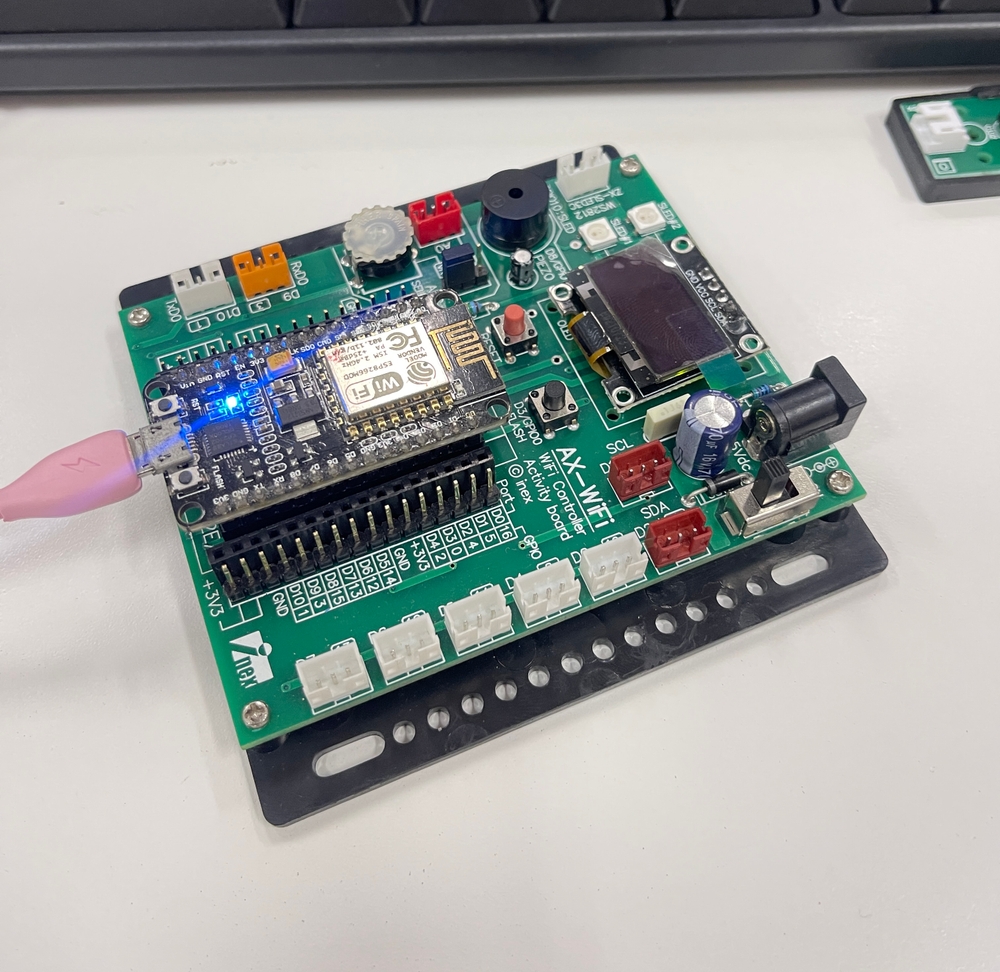
The ESP8266 is a low-cost, highly integrated microcontroller designed for IoT (Internet of Things) applications. Here are some key features and details about the ESP8266:
Key Features:
Wi-Fi Connectivity:
- Built-in 2.4 GHz Wi-Fi, compliant with IEEE 802.11 b/g/n standards.
- Capable of operating in both station (STA) and access point (AP) modes.
Processing Power:
- Powered by a 32-bit Tensilica Xtensa LX106 RISC microprocessor.
- Operating frequency ranges from 80 MHz to 160 MHz.
Memory:
- 32 KB of instruction RAM and 80 KB of user data RAM.
- External flash memory can be used to extend storage.
I/O Capabilities:
- 16 GPIO pins for general-purpose input/output.
- Integrated UART, SPI, I²C, I²S, and PWM interfaces for various communication protocols.
- ADC (Analog-to-Digital Converter) with 10-bit resolution.
Power Management:
- Low power consumption, making it suitable for battery-powered applications.
- Sleep modes to conserve energy.
Software:
- Programmable using the Arduino IDE, MicroPython, or custom firmware like NodeMCU.
- Supports TCP/IP stack for internet communication.
ESP8266 Modules:
ESP-01

A basic module with limited GPIO pins, ideal for simple projects.
ESP-12E

A more advanced module with more GPIO pins, commonly used in development boards like the NodeMCU.